You Do Not Get the Ass You Want by Sitting on It
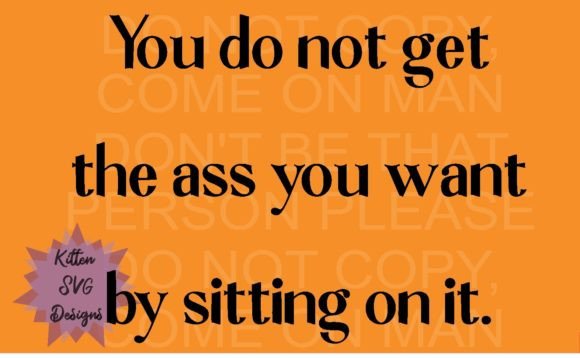
As a designer and embroidery product reviewer, I’ve seen my fair share of digital graphics. But when I first opened the file for You Do Not Get the Ass You Want by Sitting on It, I was immediately struck by its bold, irreverent energy. This isn’t just a design—it’s a statement. The visual personality is sharp, with a mix of text and imagery that feels both humorous and slightly edgy. It’s the kind of piece that makes you wonder who the target audience might be, and what kind of project would truly do it justice.
The First Impression: Mood, Layout, and Visual Personality
From the moment I viewed the design, I noticed the clean, minimalist layout. The text is centered, with a simple graphic that complements the message without overwhelming it. The shape is straightforward, which is great for versatility. It doesn’t have complex curves or intricate details that might complicate the stitching process. That simplicity makes it ideal for a range of embroidery projects, from casual to commercial.
The theme is clear: a playful take on a common saying, reimagined with a bit of cheekiness. It’s not the kind of design you’d put on a baby onesie, but it could work well on a custom tote bag, a sweatshirt, or even an embroidered patch for a more mature audience. The mood is light-hearted, but it also has a sense of confidence—something that can translate well into a branded product or a personalized gift.
Real-Life Embroidery Use Cases
I tested the design on a few different fabrics to see how it would perform in real-life situations. On a standard cotton tote bag, it looked great. The stitch density was appropriate, and the design didn’t require any special techniques. It worked well with a basic satin stitch and fill stitch, making it easy to produce in bulk for a craft business or Etsy shop.
For custom apparel, like a sweatshirt or t-shirt, the design holds up well. It’s not too large, so it fits nicely on the chest without looking cramped. On a cap or hat, it might be a bit tight, depending on the hoop size, but with proper placement, it could still work. I’d recommend checking the hoop size before starting, especially if you’re using a smaller machine.
On baby clothes, the design might be a bit too bold for some, but if you’re targeting a more mature audience, it could be a hit. For holiday gifts or personalized items, it’s a unique option that stands out from the typical seasonal designs. It could also work as a decorative element on a pillow cover or kitchen towel, adding a touch of humor to everyday items.
Where to Use It Carefully
While You Do Not Get the Ass You Want by Sitting on It is versatile, there are some situations where it might not perform as well. On small hoop sizes, the design could be challenging to stitch accurately. If you’re working with textured or stretchy fabrics, the stitches might pull or distort, especially if the stabilizer isn’t properly applied.
Thin or dark fabrics may also pose issues. The design relies on contrast, so if the thread color doesn’t stand out against the fabric, it could look washed out. Tiny lettering or detailed corners might not come through clearly, so it’s worth testing on a scrap piece before committing to a final project.
For layered garments or curved surfaces, like a cap, the design may need some adjustment to fit properly. Dense stitch areas could cause puckering, so it’s important to check the stitch density and use the right stabilizer for the fabric type.
Impact on Visual Appeal and Customer Perception
This design has a strong visual presence. When stitched correctly, it can elevate a handmade product or personalized gift, giving it a professional edge. It adds value by offering something unique that customers might not find elsewhere. However, if the execution isn’t perfect, it could lead to dissatisfaction, especially if the customer expected a higher level of detail.
For small business owners and Etsy sellers, this design could be a good addition to a collection of quirky, conversation-starting pieces. It’s ideal for a brand that wants to express a bit of humor or personality. But it’s important to consider the target audience and ensure the design aligns with the overall brand image.
Practical Designer Notes
Before using You Do Not Get the Ass You Want by Sitting on It in your own projects, here are a few things to keep in mind:
- Test the design on scrap fabric first to see how it looks and stitches.
- Check thread color contrast against different fabric backgrounds.
- Review the stitch density to ensure it works for your machine and project.
- Confirm the hoop size required for your embroidery machine.
- Inspect small details, especially if the design includes text or fine lines.
- Test it in black and white mockups to see how it translates.
- Compare the design on light and dark fabric to ensure visibility.
- Use the proper stabilizer for the fabric type.
- Verify whether the design is suitable for both personal and commercial use.
- Confirm licensing terms before selling finished items or digital products.
Final Thoughts: Is This Design Right for Your Projects?
You Do Not Get the Ass You Want by Sitting on It is a design that’s best suited for those who want to add a little personality to their work. It’s not for every project, but when used appropriately, it can make a strong impression. Whether you’re creating custom apparel, embroidered patches, or holiday gifts, this design offers a fresh, modern approach that can stand out in a crowded market.
As with any machine embroidery design, it’s important to test and adapt it to your specific needs. But if you’re looking for something that’s both functional and fun, this one might just be worth the try.